Table of Contents
What Is Insurance?
Insurance is a safety net that protects you and your family from financial disaster when unexpected events happen. You pay a small amount of money (called a premium) regularly, and in return, the insurance company promises to help pay for big expenses like medical bills, car repairs, or home damage. It’s like having a financial superhero ready to help when life throws you a curveball.
Understanding Insurance Basics
Think of insurance as a big umbrella on a rainy day. When storms come (accidents, sickness, disasters), you stay dry while others get soaked. Insurance companies collect money from many people, and when someone needs help, there’s enough money to cover their emergency.
How Insurance Works: A Simple Example | Why Insurance Matters
| Without Insurance | With Insurance |
|---|---|
| Car accident costs you $15,000 | You pay $500 deductible, insurance pays $14,500 |
| Hospital stay costs $50,000 | You pay $3,000, insurance pays $47,000 |
| House fire damage: $200,000 | You pay $2,000, insurance pays $198,000 |
Why Should You Purchase Insurance?
Buying insurance is one of the smartest money decisions you’ll ever make. Here’s why:
Protection from bankruptcy: One serious accident or illness can wipe out your life savings. Insurance prevents this from happening.
Legal requirements: Many states require you to have car insurance. If you have a mortgage, your bank requires home insurance. It’s not just smart it’s often the law.
Peace of mind: Knowing you’re protected lets you sleep better at night. You won’t constantly worry about “what if something happens?”
Family security: If something happens to you, insurance makes sure your loved ones don’t struggle financially. Life insurance can replace your income so your family can still pay bills and maintain their lifestyle.
Access to better healthcare: Health insurance doesn’t just pay bills it gives you access to preventive care, regular checkups, and better treatment options.
Business continuity: If you own a business, insurance keeps it running even when disasters strike. Without it, one lawsuit or natural disaster could close your doors forever.
10 Important Reasons to Have Insurance
1. Financial Protection During Emergencies
Life is unpredictable. Your washing machine breaks, your car needs repairs, or your child breaks an arm. These surprises can cost thousands of dollars. Insurance turns these financial mountains into manageable molehills.
2. Medical Care Without Going Broke
Healthcare in America is expensive. A simple emergency room visit can cost $3,000. Surgery can cost $50,000 or more. Health insurance makes healthcare affordable and accessible.
3. Protects Your Biggest Investment (Your Home)
Your home is probably the most expensive thing you’ll ever buy. Fire, floods, or theft could destroy it. Home insurance rebuilds your life when disaster strikes.
4. Keeps You Legal on the Road
Driving without car insurance is illegal in most states. Getting caught can result in fines, license suspension, and even jail time. Insurance keeps you legal and protected.
5. Replaces Your Income If You Can’t Work
If you get sick or injured and can’t work, disability insurance pays your bills. Without it, you could lose your home and savings while you recover.
6. Takes Care of Your Family When You’re Gone
Life insurance provides money to your family after you die. This money pays for funeral costs, mortgages, education, and daily living expenses.
7. Covers Liability When You’re Responsible
If someone gets hurt on your property or you cause a car accident, you could be sued for millions. Liability insurance protects your assets and pays legal costs.
8. Enables Business Growth
Business insurance protects against lawsuits, property damage, and lost income. It lets you take smart risks and grow your company confidently.
9. Provides Mental and Emotional Security
Financial stress damages relationships and health. Insurance removes this stress, letting you focus on living instead of worrying.
10. Builds Long-Term Wealth
Some insurance policies, like whole life insurance, build cash value over time. You can borrow against this money or use it in retirement.
Top 5 Reasons We Need Insurance
Let’s break down the absolute essentials:
Reason #1: Unexpected Events Cost Money You Don’t Have
The average American has less than $5,000 in savings. But:
- Average hospital stay: $12,000
- Average car accident: $7,500
- Average home insurance claim: $13,000
See the problem? Insurance bridges this gap.
Reason #2: You Can’t Predict the Future
Nobody plans to:
- Get cancer (1 in 2 men and 1 in 3 women will)
- Have a car accident (1 in 366 chance per year)
- Experience a house fire (1 in 3,000 homes annually)
But these things happen every day. Insurance prepares you for what you can’t predict.
Reason #3: Legal and Financial Requirements
| Requirement | Why It Matters |
|---|---|
| Auto insurance (most states) | Drive legally, protect others |
| Health insurance (ACA mandate) | Avoid tax penalties, get care |
| Mortgage insurance | Required by lenders |
| Workers compensation | Required by law if you have employees |
Reason #4: Protects Everyone, Not Just You
When you cause a car accident and hurt someone, your insurance pays their medical bills and car repairs. Without it, you’d owe thousands or millions personally.
Reason #5: Helps Society Function Better
Insurance spreads risk across millions of people. This system:
- Keeps hospitals open
- Helps disaster victims rebuild
- Prevents bankruptcy and homelessness
- Supports economic stability
The Four Main Benefits of Insurance
Benefit 1: Risk Transfer
You transfer the risk of financial loss from yourself to the insurance company. Instead of gambling with your life savings, you pay a predictable premium.
Benefit 2: Financial Security
Insurance creates a safety net under your financial life. You can plan for the future knowing that disasters won’t destroy your progress.
Benefit 3: Peace of Mind
The psychological benefit is huge. You make better decisions when you’re not paralyzed by fear of financial ruin.
Benefit 4: Legal Compliance
Avoid fines, penalties, and legal trouble by meeting required insurance obligations.
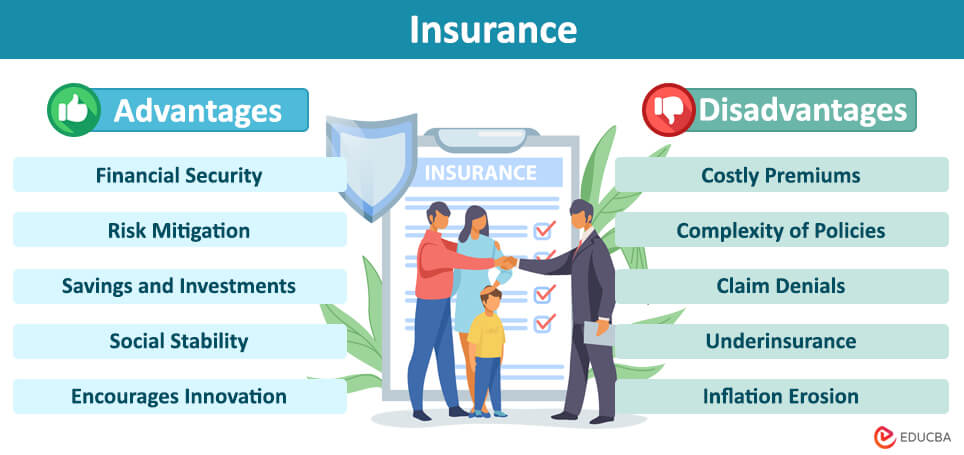
Insurance and Your Financial Health
Why Is Insurance an Essential Part of a Healthy Financial Plan?
Imagine building a house without a foundation. That’s what creating wealth without insurance looks like—unstable and dangerous.
Insurance fits into your financial plan this way:
Emergency Fund ($1,000-$5,000)
         ↓
Insurance Coverage (health, auto, home, life)
         ↓
Retirement Savings (401k, IRA)
         ↓
Investment and Wealth Building
The Financial Protection Pyramid
| Level | Protection Type | Purpose |
|---|---|---|
| Foundation | Health & Auto Insurance | Daily protection |
| Middle | Home & Life Insurance | Major asset protection |
| Top | Disability & Umbrella Insurance | Complete security |
Without insurance, one medical emergency or lawsuit can destroy years of savings and investment gains. Financial advisors agree: insurance isn’t optional—it’s foundational.
Real-life example: Sarah saved $30,000 for retirement by age 35. Then she got diagnosed with cancer and had no health insurance. Medical bills wiped out her entire savings plus forced her into $80,000 of debt. If she’d spent $300/month on health insurance, she’d still have her savings and her health.
When Insurance Doesn’t Help
Are There Situations Where Insurance Would Not Help Even Though You Have It?
Yes, absolutely. Understanding these situations prevents disappointment:
1. Excluded Events Most policies don’t cover:
- Intentional damage you cause
- War or nuclear events
- General wear and tear
- Pre-existing conditions (in some cases)
2. Policy Limits If your home insurance covers $200,000 but your house costs $300,000 to rebuild, you’re $100,000 short.
3. Deductibles Too High If you have a $10,000 deductible and $8,000 in damage, insurance pays nothing.
4. Policy Lapses Miss a payment? Your coverage stops. Many people don’t realize they’re uninsured until they file a claim.
5. Wrong Type of Coverage Examples:
- Basic car insurance doesn’t cover flooding (need comprehensive)
- Homeowners insurance doesn’t cover earthquakes (need separate policy)
- Life insurance doesn’t pay for terminal illness expenses (need critical illness insurance)
Common Coverage Gaps Table
| What Happened | Coverage Type Needed | Why Standard Policy Won’t Cover |
|---|---|---|
| Basement floods | Flood insurance | Not covered by standard home insurance |
| Identity theft | Identity protection rider | Standard policies don’t cover fraud |
| Expensive jewelry stolen | Scheduled personal property | Standard policies have limits ($1,500 typically) |
| Can’t work due to back injury | Disability insurance | Health insurance doesn’t replace income |
What’s the Point of Insurance If It Doesn’t Cover Anything?
This frustration is real, but it’s based on a misunderstanding. Insurance DOES cover things—but you need the RIGHT insurance with the RIGHT coverage.
The truth:
- Insurance covers what you paid it to cover
- You must read your policy
- Cheap insurance = less coverage
- Comprehensive insurance = more coverage (but costs more)
How to make insurance actually useful:
- Review your policy annually – Life changes, coverage should too
- Ask questions – If you don’t understand something, call your agent
- Don’t underinsure – Saving $20/month isn’t worth being $50,000 short in a disaster
- Document everything – Keep receipts, photos, and records for easier claims
- Read the exclusions – Know what’s NOT covered, so you can buy additional coverage if needed
Insurance works when you:
- Buy adequate coverage amounts
- Understand your deductibles
- File claims properly
- Keep your premiums current
- Choose the right policy types
Disadvantages of Insurance
Being honest about insurance means discussing the downsides too:
1. Monthly Costs Add Up
Average family spending on insurance:
- Health insurance: $500-$1,500/month
- Auto insurance: $100-$300/month
- Home insurance: $100-$200/month
- Life insurance: $50-$200/month
Total: $750-$2,200/month – That’s a significant chunk of income.
2. Doesn’t Cover Everything
We’ve discussed this, but it’s worth repeating: no insurance policy covers every possible scenario. There are always exclusions and limitations.
3. Complex and Confusing
Insurance policies are filled with legal language, exceptions, and fine print. Most people don’t fully understand what they’re buying.
4. Claims Can Be Denied
Insurance companies sometimes deny legitimate claims, forcing you to appeal or hire lawyers to get what you deserve.
5. Prices Increase Over Time
Your premiums can go up every year, especially as you age or if you file claims. This makes budgeting harder.
6. You Might Never Use It
If you stay healthy and avoid accidents, you could pay thousands in premiums and never file a claim. This feels like wasted money (though it’s actually paid for peace of mind).
7. Deductibles Create Out-of-Pocket Costs
Even with insurance, you still pay deductibles, copays, and coinsurance. These costs surprise many people.
8. Time-Consuming Claims Process
Filing claims requires paperwork, phone calls, documentation, and waiting. It can take months to resolve complex claims.
How to Buy Insurance
Buying insurance doesn’t have to be overwhelming. Follow these steps:
Step 1: Identify What You Need to Protect
Make a list:
- Your health and body
- Your car
- Your home or apartment
- Your income
- Your family’s future
- Your business (if applicable)
- Your valuable possessions
Step 2: Determine Required vs. Optional Insurance
| Required (Must Have) | Important (Should Have) | Optional (Nice to Have) |
|---|---|---|
| Auto insurance (most states) | Life insurance (if others depend on you) | Pet insurance |
| Health insurance | Disability insurance | Travel insurance |
| Homeowners (if mortgage) | Umbrella liability insurance | Wedding insurance |
| Workers comp (if employees) | Renters insurance | Extended warranties |
Step 3: Calculate How Much Coverage You Need
Home insurance: Replacement cost of your home + contents Auto insurance: State minimums (at minimum), preferably $100,000/$300,000/$100,000 Life insurance: 10-15 times your annual income Health insurance: Based on your health needs and budget
Step 4: Get Multiple Quotes
Never buy from the first company you contact. Get at least 3-5 quotes from:
- Independent agents (represent multiple companies)
- Direct insurers (like Geico, Progressive)
- Online comparison tools
- Your bank or credit union
Step 5: Compare Coverage, Not Just Price
The cheapest option often provides the worst coverage. Compare:
- Coverage limits
- Deductibles
- Exclusions
- Customer reviews
- Claims payment history
- Financial strength ratings
Step 6: Ask Questions
Don’t sign anything until you understand:
- What’s covered and what’s not
- How much your deductible is
- How to file a claim
- What happens if you miss a payment
- How to cancel if needed
- Whether rates will increase
Step 7: Review and Purchase
Read the entire policy (yes, really). If something seems wrong, ask before you buy. Once satisfied, complete the purchase and save all documents.
Step 8: Review Annually
Life changes. Kids are born, you buy a new car, you move, you get a raise. Review your coverage every year to ensure it still fits your needs.
How Do I Choose an Insurance Provider?
Choosing the right insurance company is as important as choosing the right coverage. Here’s what to evaluate:
Insurance Coverage
What to look for:
- Do they offer all the types of insurance you need?
- Can you bundle policies for discounts?
- Are coverage limits high enough?
- Do they offer special endorsements or riders you need?
Questions to ask:
- “What’s covered under a basic policy?”
- “What optional coverages do you recommend?”
- “Are there any coverage gaps I should know about?”
Financial Strength
An insurance company can’t pay your claim if they go bankrupt. Check their financial ratings:
| Rating Agency | What to Look For | Where to Check |
|---|---|---|
| A.M. Best | A++ to A- (Superior to Excellent) | ambest.com |
| Standard & Poor’s | AA to A (Very Strong to Strong) | standardandpoors.com |
| Moody’s | Aa to A (Excellent to Good) | moodys.com |
Never buy from a company rated below “B” grade.
Agency Model
Different companies work differently:
Captive Agents:
- Work for one company only (State Farm, Allstate)
- Deep knowledge of their products
- May be biased toward their company
- Good for: Simple, straightforward needs
Independent Agents:
- Represent multiple companies
- Can shop around for best rates
- Offer more choices
- Good for: Complex needs, comparing options
Direct Insurers:
- No agent, buy online or by phone (Geico, Progressive)
- Usually cheaper
- Less personal service
- Good for: Budget-conscious, tech-savvy buyers
Choose based on:
- How much guidance you need
- Your comfort with technology
- Your budget
- Complexity of your insurance needs
Customer Service
Great insurance means nothing if you can’t get help when you need it.
Evaluate customer service by:
- Availability
- 24/7 phone support?
- Online chat?
- Mobile app?
- Local office you can visit?
- Claims Process
- How easy is it to file a claim?
- Average claims processing time?
- Claims satisfaction ratings?
- Customer Reviews
- Check Google reviews
- Read consumer reports
- Visit J.D. Power ratings (jdpower.com)
- Ask friends and family about their experiences
- Complaints
- Check your state insurance department website
- Look at complaint ratios
- High complaints = red flag
- Communication
- Do they respond quickly to questions?
- Are explanations clear and helpful?
- Do they proactively contact you about policy changes?
Customer Service Test
Before buying, call their customer service line with a question. Judge:
- Wait time
- Representative’s knowledge
- Helpfulness and patience
- Clarity of answers
This small test reveals how they’ll treat you as a customer.
Making Your Final Decision
The Insurance Decision Checklist
✅ Coverage: Policy covers what I need to protect
✅ Cost: Premiums fit my budget
✅ Company: Financial rating of A- or better
✅ Claims: Positive reviews about claims payment
✅ Service: Customer service is accessible and helpful
✅ Understanding: I understand what’s covered and what’s not
✅ Comparison: I’ve compared at least 3 different quotes

